
Full Mouth Rehabilitation | Restore Your Smile | All Smilez
Having several dental problems can affect you more than the way your smile looks. Missing teeth, broken restorations, worn enamel and difficulty chewing may interfere with routine activities and make routine oral care more difficult.

Sometimes if you have multiple teeth that need treatment, it is not always the best solution to deal with each issue separately. Total mouth reconstruction in Borivali can be considered when a patient needs a coordinated treatment plan to fix multiple dental issues and improve oral function.
The treatment plan is determined by the condition of the teeth, gums, jaw and existing restorations. Knowing what full mouth rehabilitation is provides you with a little background when preparing for a dental consultation and making educated decisions about your oral health.
1. What Is Full Mouth Rehabilitation?
Sometimes called full mouth reconstruction, full mouth rehabilitation is the process of planning and combining multiple dental procedures to restore the function, health and appearance of multiple teeth.
Comprehensive rehabilitation means looking at how the teeth work together, rather than just treating a single cavity or a missing tooth. The dentist will assess chewing function, bite alignment, tooth structure, gum health and existing dental work before recommending treatment.
The plan may incorporate restorative procedures such as crowns, bridges, fillings, dental implants or other appropriate treatments depending on the patient’s needs. Not all of these procedures are done on every patient.
Full Mouth Rehabilitation Objective: In Borivali, an individualised treatment plan will be developed that addresses the underlying dental concerns while preserving healthy tooth structure wherever possible.
2. Who May Need Full Mouth Rehabilitation?
Full mouth rehabilitation may be considered when several dental problems affect the same patient and require coordinated care.
Multiple missing teeth: Gaps caused by missing teeth can affect chewing and may influence the position of neighbouring teeth. Suitable replacement options depend on the patient’s oral health and clinical assessment.
Severely worn teeth: Teeth may wear down because of grinding, erosion or other factors. Significant wear can affect tooth structure, bite function and sensitivity.
Extensive tooth decay: When several teeth have advanced decay or substantial damage, a dentist may need to plan multiple restorations together.
Damaged or failing restorations: Older crowns, bridges or fillings may need assessment if they are damaged, loose or no longer functioning properly.
Bite-related problems: Certain bite problems can contribute to uneven tooth wear, discomfort or difficulty chewing. Their cause must be assessed before treatment is planned.
A combination of dental concerns: Some patients experience several of these issues simultaneously, making a coordinated approach useful.
If you are considering full mouth rehabilitation Borivali, a dental examination can establish whether comprehensive rehabilitation is appropriate or whether a smaller number of targeted treatments would be sufficient.
3. What Treatments May Be Included?
Full mouth rehabilitation is not one fixed procedure. The treatments selected depend on the diagnosis, the condition of the remaining teeth and the patient’s priorities.
Dental crowns: Crowns may be recommended for certain weakened or extensively damaged teeth to restore their shape, strength and function.
Dental bridges: Bridges can replace one or more missing teeth by using supporting teeth or other suitable structures, depending on the design and clinical circumstances.
Dental implants: Implants may be considered for replacing missing teeth when the patient’s bone, gum health and general clinical circumstances support this option.
Fillings and restorative treatments: Teeth affected by decay or smaller areas of damage may be treated with suitable restorations rather than more extensive procedures.
Gum treatment: Healthy gums are important for the long-term success of dental rehabilitation. Gum disease may need treatment before restorative procedures begin.
Bite correction and protective appliances: When tooth wear or grinding is a concern, the dentist may assess the bite and recommend suitable protective measures where appropriate.
These treatments are not automatically combined in every case. A suitable plan should prioritise oral health, function, durability and the preservation of natural teeth.
4. How Is a Full Mouth Rehabilitation Plan Created?
Comprehensive dental care begins with an accurate diagnosis. Because several teeth and oral structures may be involved, careful planning is essential.
Step 1: Initial consultation
The dentist discusses your concerns, symptoms, previous dental treatment and expectations. This is also an opportunity to explain any difficulty chewing, sensitivity or discomfort.
Step 2: Clinical examination
The teeth, gums, bite and existing restorations are examined. Dental X-rays or other diagnostic investigations may be recommended when clinically necessary.
Step 3: Identifying priorities
Urgent problems, such as active infection or significant decay, may need attention before elective restorative procedures. The dentist determines the appropriate sequence of treatment.
Step 4: Discussing treatment options
The dentist explains the proposed procedures, alternatives, expected benefits, limitations, possible risks and estimated costs.
Step 5: Establishing a treatment schedule
Some procedures can be performed relatively quickly, and some require healing time, lab work or multiple visits. The schedule should be driven by clinical needs, not an arbitrary deadline.
This step by step process allows patients to understand what their full mouth rehabilitation Borivali plan involves before commencing treatment.
5. How Long Does Full Mouth Rehabilitation Take?
There is no specific time frame for full mouth rehabilitation. The length of treatment will depend on the number of teeth involved, the procedures needed, the state of the gums and bone, and whether healing time is needed.
For instance, a patient requiring multiple restorations may have a different schedule than someone requiring extractions, implants or treatment for advanced gum disease.
After the first assessment, your dentist should give you an estimated order of appointments and explain what might affect the timing.
Complex dental rehabilitation should not be rushed just to get a faster result. The treatment outcome can be critical for the correct diagnosis, careful execution and adequate healing time.
If you have work, travel or family commitments then discuss these in advance so that a realistic treatment schedule can be planned.
6. Is Full Mouth Rehabilitation Painful?
The level of discomfort depends on the procedures involved and the condition of the teeth How uncomfortable it is depends on the procedures and the state of your teeth and surrounding tissues. Procedures that may cause some discomfort are usually carried out under local anaesthetic and your dentist will discuss the pain management options available for your treatment.
Some tenderness or sensitivity may occur after certain procedures. Your dentist will provide If you suffer from dental anxiety, tell the clinic before treatment. Sharing your concerns and knowing what to expect at each stage of the process can help you to feel more ready.
If you have dental anxiety, let the clinic know before treatment. Discussing your concerns and understanding each stage of the process may help you feel more prepared.
Patients who are considering full mouth rehabilitation In Borivali one should ask about expected recovery, potential complications and aftercare rather than relying on generalised promises of pain free treatment.
7. How Can You Maintain the Results?
Comprehensive rehabilitation does not eliminate the need for ongoing dental care. Long-term maintenance helps protect the teeth and restorations and supports healthy gums.
Follow these practices:
- Brush twice daily with fluoride toothpaste.
- Clean between your teeth every day using suitable interdental cleaning aids.
- Attend dental reviews at the intervals recommended for your needs.
- Avoid using your teeth to bite hard objects or open packaging.
- Discuss teeth grinding with your dentist if you notice signs such as wear or jaw discomfort.
- Follow any specific cleaning and maintenance instructions for implants, bridges, crowns or other restorations.
The lifespan of dental restorations varies according to the material, location, oral hygiene, bite forces and other individual factors. Regular reviews allow your dentist to identify problems and recommend maintenance when necessary.
Frequently Asked Questions
What is full mouth rehabilitation?
Full mouth rehabilitation is a customised dental treatment plan designed to address multiple oral health concerns affecting the teeth, gums and bite. Depending on individual needs, it may involve crowns, bridges, implants, restorative procedures or other treatments to improve oral function and overall dental health.
What treatments are included in full mouth rehabilitation?
The treatment plan varies from person to person. It may include dental crowns, bridges, implants, fillings, gum treatment or other restorative procedures. The dentist determines the appropriate combination after examining the teeth, gums, bite and supporting structures.
What are the benefits of full mouth rehabilitation?
Depending on the case, full mouth rehabilitation can help improve chewing efficiency, restore damaged teeth, address bite problems and enhance the appearance of the smile. Maintaining good oral hygiene and attending recommended dental check-ups are important for protecting the results.
Smiley Tips
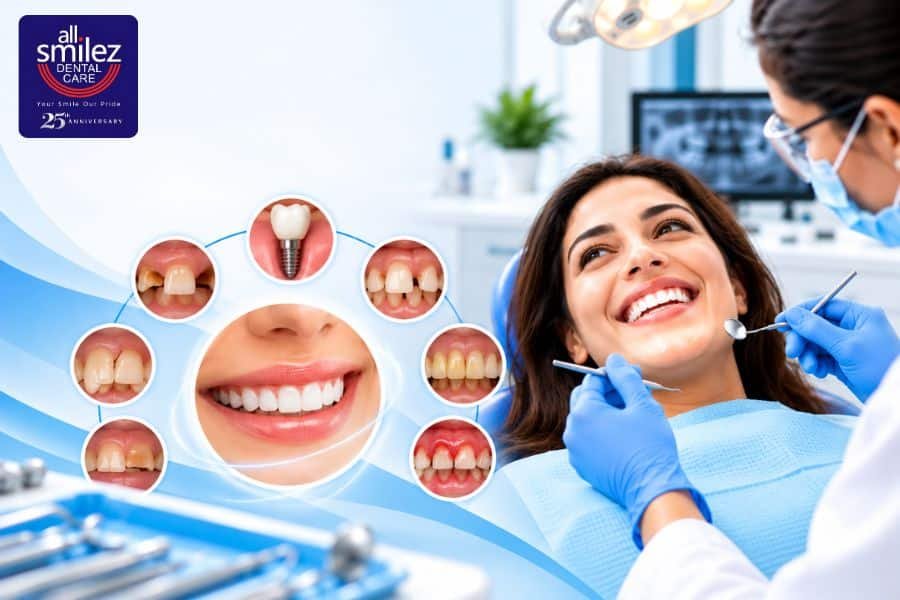
There are many dental problems that can affect your chewing, comfort and confidence, but not all of them require the same combination of procedures. Full mouth rehabilitation combines the treatments needed to treat multiple dental problems for a complete approach for suitable patients.
All Smilez Dental Clinic, Borivali West, Mumbai is 25 years old legacy which tells a lot about the long standing dedication of the clinic towards dental care. If you are looking at full mouth rehabilitation in Borivali, schedule a consultation to learn about your oral health, the treatment options available, the timeline of the treatment and the maintenance required after.
A carefully planned approach can help you make informed decisions about restoring dental function and protecting your oral health over time.
All Smilez Dental Clinic — Your Smile, Our Pride.
Image Reference: Magnific
Disclaimer: All trademarks, logos, and brand names are the property of their respective owners. All company, product, and service names used in this website are for identification purposes only. Use of these names, trademarks, and brands does not imply endorsement.